

How to choose the right propeller for my outboard marine engine?
Oct 26, 2026
Leave a message
If you're a boater who's ever stood at the helm of your small craft, staring at the outboard propeller like it's a puzzle box, you're not alone. As an outboard marine engine supplier who's fielded hundreds of calls from boaters asking, "Why does my engine feel sluggish even when I crank the throttle?" I can tell you 9 times out of 10, the culprit is the wrong propeller. A propeller isn't just a metal fan spinning underwater-it's the bridge between your engine's power and your boat's performance, dictating everything from top speed and hole-shot acceleration to fuel efficiency and load capacity. Choosing one that's "close enough" might save a few bucks upfront, but it'll cost you in lost performance, extra fuel, and even premature engine wear. In this guide, I'll break down the science of propeller selection, share the common mistakes I've seen boaters make, and tie in the right tools and engine pairs to make the choice easy-plus, I'll point you to the engines we supply that pair perfectly with the right prop match.
First, let's get the basics straight: propellers are defined by two key measurements, and skipping these is the number one mistake I see. The first is pitch, which is the distance a propeller would "screw" into water in one full spin-think of it like the tread on a tire for water. A higher pitch means the prop moves more water per rotation, so it's great for top-end speed, but it needs enough engine RPM (revolutions per minute) to spin that pitch efficiently. A lower pitch is better for accelerating quickly, towing water toys, or carrying heavy loads, because it doesn't demand as much RPM to spin, so your engine hits its optimal power band faster. The second measurement is diameter, the width of the propeller's circle. A wider diameter grips more water, which boosts acceleration and load capacity, but too wide can cause your engine to strain, hit its RPM limit too soon, or even slip on the water-wasting power.
A lot of boaters ask me, "Do I just match the prop to my engine's horsepower?" And while that's a starting point, it's not the whole story. Let's use a real example: if you own a mid-sized fishing dinghy that runs on a 18 hp boat motor, you might think a standard 18-pitch prop is right, but if you're loading it with a cooler of gear and two friends, a 17-pitch prop will let you jump on plane faster without bogging down. But if you're using that same 18 hp motor on a lightweight skiff for flatwater fishing where speed matters most, a 19-pitch prop will let you cruise at a steady 25 mph without your engine screaming at max RPM. That's why we often direct customers looking for a reliable 18 hp motor to take a quick look at our 18 Hp Boat Motor page, because these engines are built to pair with a range of prop pitches based on your specific use case.
Another common mix-up is between 2-stroke and 4-stroke outboards when picking a prop. 2-stroke engines, like the popular 2 Stroke 15 HP Outboard Engine we supply, tend to have a higher RPM range and a smoother power delivery at high speeds. That means a slightly higher pitch prop will work better for them because they can reach the RPM needed to move that extra water without bogging. For example, if you're using a 15 hp 2-stroke on a small fishing tender, a 19-pitch prop will let you get to your fishing spot quickly, whereas a 17-pitch would make the engine strain to hit top speed. That's why so many of our customers who use 2-stroke engines check out our 2 Stroke 15 HP Outboard Engine page for prop recommendations tailored to their motor's design.
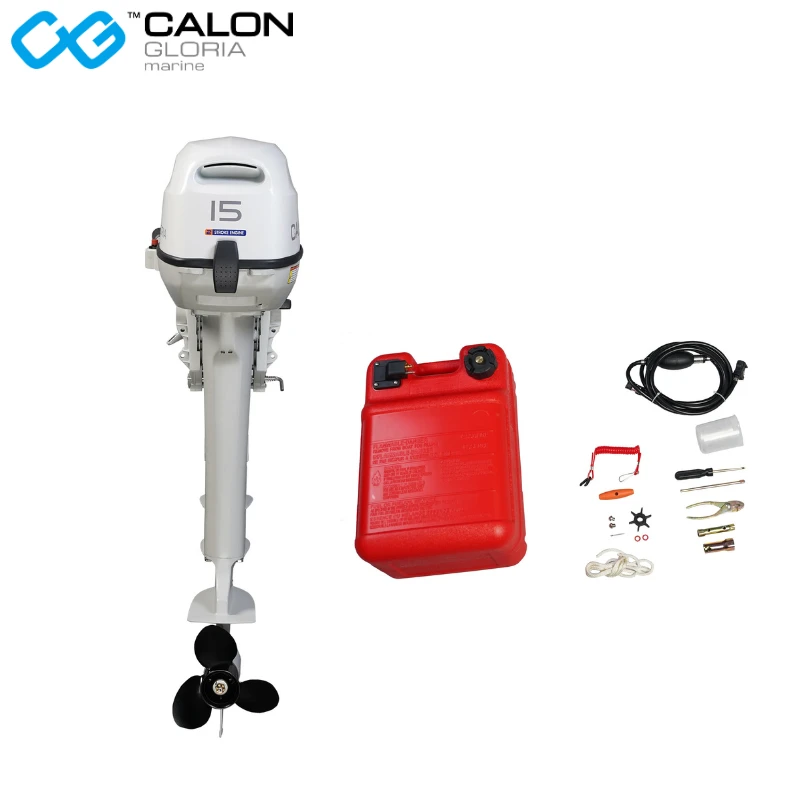
We also get a lot of questions about lightweight outboards, especially from people with small tenders or kayaks with auxiliary engines. A light outboard (we call these Lightest Outboard Engine models) has a smaller power band, so its prop needs to be sized for low-effort rotation. A too-wide diameter or high pitch here will make the engine work overtime, draining battery (if it's electric, though we focus on gas) or fuel faster. For a 9.9 hp lightweight outboard, for example, a 10-inch diameter, 13-pitch prop is a perfect match-it grips just enough water to accelerate without straining, which keeps fuel efficiency high.
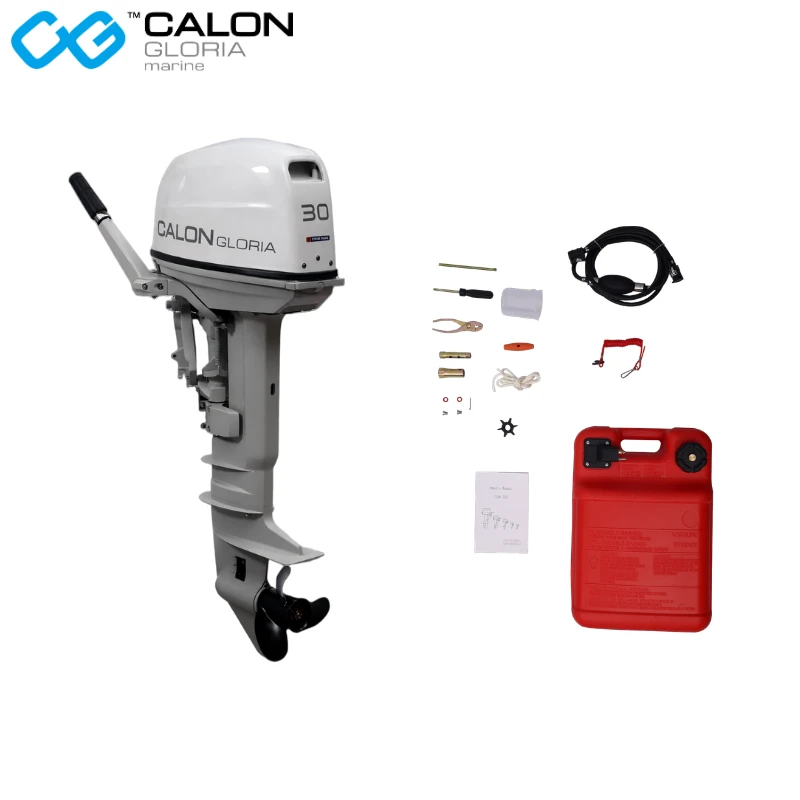
Then there are gas outboard engines, which are the workhorses for most recreational boaters. These run on a mix of low- and high-RPM power, so their propellers need to balance both acceleration and top speed. For a Gas Outboard Engine rated at 30 hp, which is a sweet spot for small to mid-sized boats, the prop choice depends on what you use the boat for: if it's a speed boat for tubing, a 21-pitch prop will give you the hole-shot you need; if it's a pontoon boat for slow cruises with family, a 19-pitch prop will let you stay in your engine's optimal RPM range (around 5,000 RPM for most 30 hp gas outboards) without wasting fuel. That's why we highlight the link to our Best 30hp Outboard page, since those models are tested to work with a range of prop pitches for different use cases.
Beyond pitch and diameter, there are a few other factors that can make or break your prop choice. First, number of blades: 3-blade props are the most common because they balance grip and smoothness-great for acceleration and steady cruising. 4-blade props are better for heavy loads, rough water, or towing, because they have more surface area to grip water, which reduces slip and keeps your engine running smoothly at lower speeds. The trade-off is that 4-blade props add a tiny bit of drag at top speed, so if you're all about speed, stick to 3-blade. Second, prop material: aluminum is affordable and easy to replace if you hit a rock or log, which is perfect for new boaters or those who fish in shallow, rocky waters. Stainless steel is stronger, gives better performance, and lasts longer, but it's pricier-so if you're a serious boater who uses your engine heavily, it's worth the investment. Third, boat weight and use: if you're carrying a lot of gear, people, or towing, go for a lower pitch and wider diameter. If you're a casual boater who cruises alone or with one person, a higher pitch and slightly narrower diameter will work better.
I've seen so many boaters make the mistake of just grabbing the same prop that came with their old engine without checking. When you switch to a new engine-like moving from a 15 hp to a 30 hp outboard (which is why our Best 30hp Outboard page is a go-to for that transition)-the engine's power band changes, so you need to adjust the prop accordingly. For example, a 15 hp engine might run best at a 17-pitch prop, but a 30 hp engine needs a 21-pitch to use its extra power effectively. That mismatch leaves the new engine underperforming, wasting fuel, and even wearing out faster because it's working harder than it should.
Another mistake: ignoring RPM limits. Every outboard engine has a recommended wide-open throttle (WOT) RPM range-usually between 5,000 and 6,000 RPM for most recreational models. Your prop has to be sized so that your engine hits that WOT range when you're cruising at full throttle. If your engine is hitting WOT below the recommended range, that means your prop is too high in pitch-it's moving too much water, so the engine can't spin fast enough. If it's above the WOT range, your prop is too low in pitch, so the engine is spinning too fast and wasting power. That's where a tachometer (a gauge that measures engine RPM) comes in-if you don't have one, it's worth adding to your dash, because it's the easiest way to tell if your prop is a good match.
Let's walk through a real scenario to tie it all together. Suppose you have a 16-foot aluminum fishing boat that you use for weekend trips with one other person, plus a 50-pound cooler and fishing gear. You're running a 2 Stroke 15 HP Outboard Engine from our inventory. Here's how to pick the prop: your boat is 16 feet, so it's not super heavy, but you're carrying some gear, so you want a good hole-shot. A 3-blade, aluminum prop with a 14-inch diameter and 17-pitch is perfect. Why? The 17-pitch is low enough that the 2-stroke engine's high RPM range can spin it easily, giving you quick acceleration to get to your fishing spot, and the 3-blade gives smooth power. If you were using the same boat for tubing, you'd bump up to an 18-pitch to handle the extra load of the tow rope and a kid on a tube. If you were just cruising alone, you could drop to a 16-pitch for better fuel efficiency at steady speeds.
Now, what if you have a 20-foot pontoon boat that you use for family cruises, with a gas outboard-maybe one of the models on our Best 30hp Outboard page. Pontoons are heavy, so you need a prop that can handle the weight without making the engine strain. A 4-blade, stainless steel prop with a 15-inch diameter and 19-pitch is ideal. The 4-blade grips more water to push the heavy pontoon onto plane quickly, the stainless steel is durable enough for long-term use, and the 19-pitch lets the 30 hp gas engine hit its recommended WOT range of 5,500 RPM, so you're not wasting fuel or power. If you tried a 21-pitch prop here, the engine would only hit 5,000 RPM at WOT, which is below the recommended range, so it'd feel sluggish and use more gas.
We also get a lot of questions from people who want the lightest possible setup, like those with a small inflatable dinghy for sailing auxiliary power. For these, our Lightest Outboard Engine models (like a 6 hp lightweight gas engine) pair best with a small, 2-blade aluminum prop with a 9-inch diameter and 11-pitch. The 2-blade reduces drag, the small diameter is easy for the low-power engine to spin, and the 11-pitch gives just enough acceleration to move the dinghy without straining.
So, how do you measure your current prop to get the right replacement? It's simple: look for the numbers stamped on the prop's hub. Most props have two numbers, like "13 x 17" - the first is diameter (13 inches), the second is pitch (17 inches). That's your starting point. If you're replacing a prop because you damaged it, start with the same diameter and pitch, but if you're upgrading for performance, use the WOT rule: if your engine is hitting WOT below the recommended range, go up one pitch (or 2 for heavy loads); if it's above, go down one pitch. If your diameter feels too tight (your engine is slipping a lot), go up a little, but only if your WOT RPM stays in the recommended range.
At the end of the day, prop selection isn't about picking the most expensive or the biggest-it's about matching your prop to your engine, boat weight, and use case. Whether you're running a small 2-stroke tender, a mid-sized gas outboard for a fishing boat, or a lightweight engine for a dinghy, the right prop will make your engine feel like it's working with you, not against you. If you're still not sure which prop pairs with our outboard models, like the ones on our 18 Hp Boat Motor or Gas Outboard Engine pages, reach out to our team-we'll walk you through the specifics of your boat and engine to help you get the right fit.
References
- National Marine Manufacturers Association (NMMA). "Outboard Propeller Selection Guide." NMMA Boating Basics, 2024.
- Society of Automotive Engineers (SAE). "Performance Characteristics of Marine Propellers for Small Outboard Engines." SAE International Journal of Aerospace, vol. 16, no. 2, 2023, pp. 456-472.
- U.S. Coast Guard Auxiliary. "Boating Safety: Propeller Maintenance and Selection." USCG Auxiliary Boating Education, 2024.
- Mercury Marine. "Propeller Pitch and Diameter: Matching to Your Outboard." Mercury Marine Technical Guide, 2023.
- Yamaha Outboards. "2-Stroke vs. 4-Stroke Outboard Propeller Requirements." Yamaha Technical Resources, 2024.