


Differences between marine engines and automotive engines
Apr 16, 2025
Leave a message
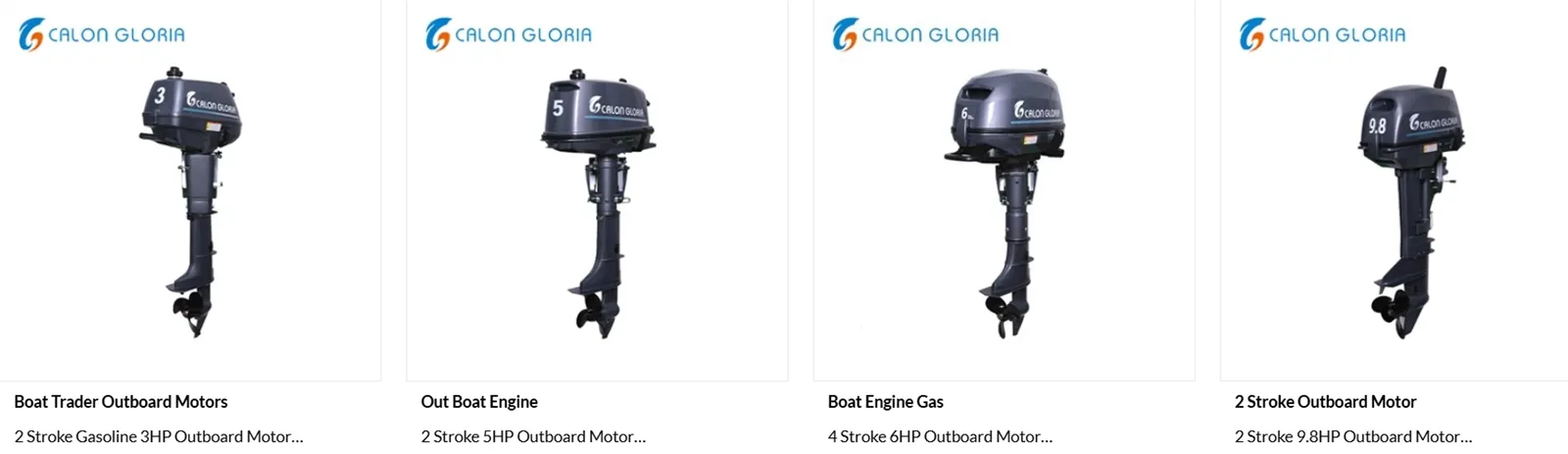
The core difference between marine engines and automotive engines lies in the different design goals and working environments, which leads to significant differences in speed, cooling system, fuel type, emission standards and technical applications.
Main difference analysis: Speed and power design
Marine engines are usually medium and low speed engines (speed is generally less than 800rpm), which need to match propeller efficiency and reduce wear.
Automotive engines are mostly high-speed engines (passenger car gasoline engines can reach thousands of rpm), pursuing high power density and fast response.
Cooling system
Marine engines use a dual-circulation cooling system: the internal circulation uses fresh water to cool the engine, and the external circulation exchanges heat through seawater pumps and heat exchangers to avoid direct contact between seawater and internal components.
Automotive engines only need a single-circulation cooling system and do not need to deal with seawater corrosion.
Fuel type and emission standards
Marine engines often use heavy oil (large ships) or diesel (auxiliary power generation), need to adapt to high-sulfur fuel, and emissions follow the Tier standards of the International Maritime Organization (IMO).
Automotive engines are mainly gasoline or diesel, and their emissions must comply with national standards (such as National VI) or European standards (such as Euro V).
Technology iteration and application scenarios
Marine engine technology updates slowly, and mechanical pumps are still widely used, while automotive engines have popularized new technologies such as electronic fuel injection and high-pressure common rail.
Marine engines are divided into main propulsion units (such as diesel engine propulsion characteristics) and auxiliary generator sets (such as marine diesel generator sets) according to their uses.
Supplementary explanation: Adaptability: In theory, automotive engines can be modified for small boats, but due to differences in efficiency, cooling and fuel adaptability, professional marine engines are still a better choice.
Test standards: Marine engines need to test propulsion characteristic curves, while automotive engines focus on operating cycle tests (such as NEDC, WLTC).
The above differences reflect the pertinence of the two engines in design and application, and the adaptation type needs to be selected according to specific scenarios.