


What to Do If the Outboard Falls into the Water?
Dec 27, 2021
Leave a message
Outboard motors are propulsion devices used to provide power for boats, ensuring they meet various operational requirements on the water. CALON's outboards are compact, have stable performance, and boast advanced technology, resulting in a low failure rate during normal use. However, most failures are caused by improper operation. Below is a guide to common issues, usage requirements, and maintenance tips for outboards.
Requirements for Outboard Engines
An outboard engine should only be used when the boat is fully afloat. When using the outboard:
Secure it to the tailboard of the stern float box as required.
Connect the maneuvering flexible shaft, control cable, and oil pipeline.
Attach the power line to the junction box outside the boat.
Ensure the engine's direction of rotation aligns with the desired direction of the boat.
Before the boat operates at sea (or on water), it must first undergo a water test. The steps are as follows:
Select a sloped water area. Install and inspect the outboard engine as required, ensuring it is tilted at an angle (not touching the ground).
Slowly drive the boat into the water. When it is partially afloat, lower the outboard.
Place the control box in the neutral position and start the outboard at idle speed.
Gradually move the boat to a fully floating position. Engage forward gear, then reverse gear, to check the engine and maneuvering device.
To land, choose a suitable landing spot, stop the engine, and tilt it before taking the boat ashore.
What to Do If the Outboard Falls into Water?
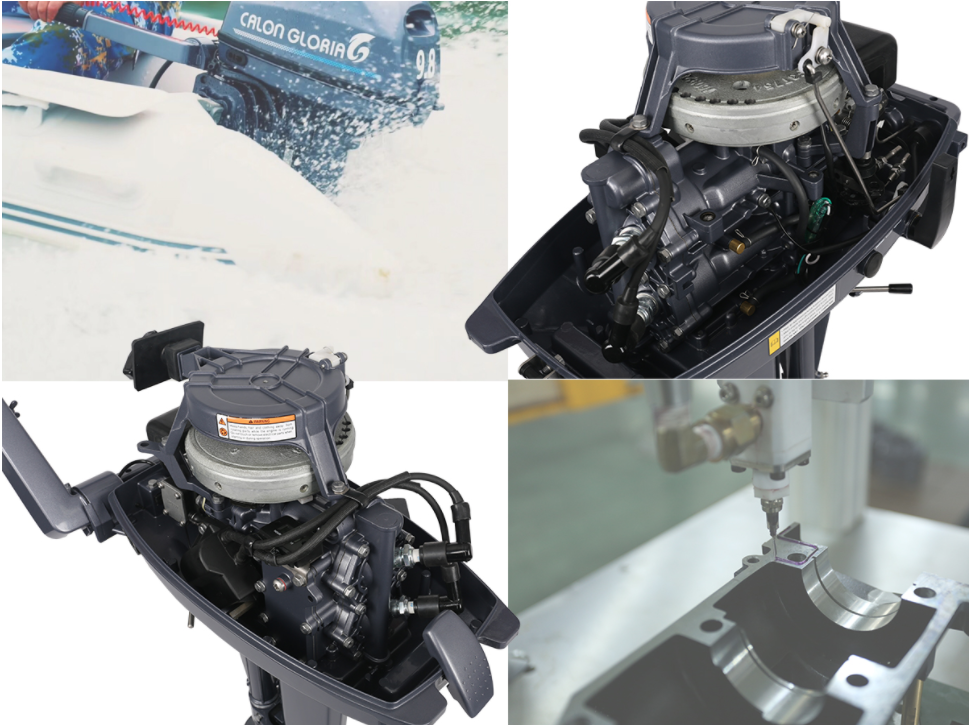
Handling After Submersion
If the outboard engine accidentally falls into the water, its internal components can be easily damaged. Follow these steps:
Reset the engine as quickly as possible, and tow the boat to shore for maintenance.
Inspect the crankshaft::
If it rotates freely, proceed with further inspection and maintenance.
If it does not rotate freely, internal damage has occurred, and the engine requires an overhaul.
For outboards submerged in seawater:
The MAP sensor of the ECU is likely damaged, requiring ECU replacement.
After retrieval, run the engine for at least two hours to prevent further internal damage.
If the engine does not run after maintenance, seek professional help to disassemble, clean, and lubricate all components.
Maintenance Precautions
Electrical and Ignition Systems:
Disconnect the battery cable before starting repairs to avoid destructive short circuits or electric shocks.
Air Intake and Exhaust Ports:
Cover open ports with clean materials to prevent foreign objects from entering the cylinder and causing damage when the engine is started.
If replacing fasteners, ensure their size and strength match the original.
Fuel System Maintenance:
Turn off the engine, disconnect the battery, and isolate any fire sources before starting work.
Drain and seal the fuel properly.
Conduct maintenance in a well-ventilated area to prevent leaks.
Rubber and Fuel Line Checks:
Inspect the rubber ball and fuel line for cracks, swelling, leaks, or hardening. Replace immediately if damaged.
Regularly clean and replace the oil-water separator.
If you're looking for outboard motors for your boat, feel free to contact CALON. We look forward to receiving your email and assisting you.